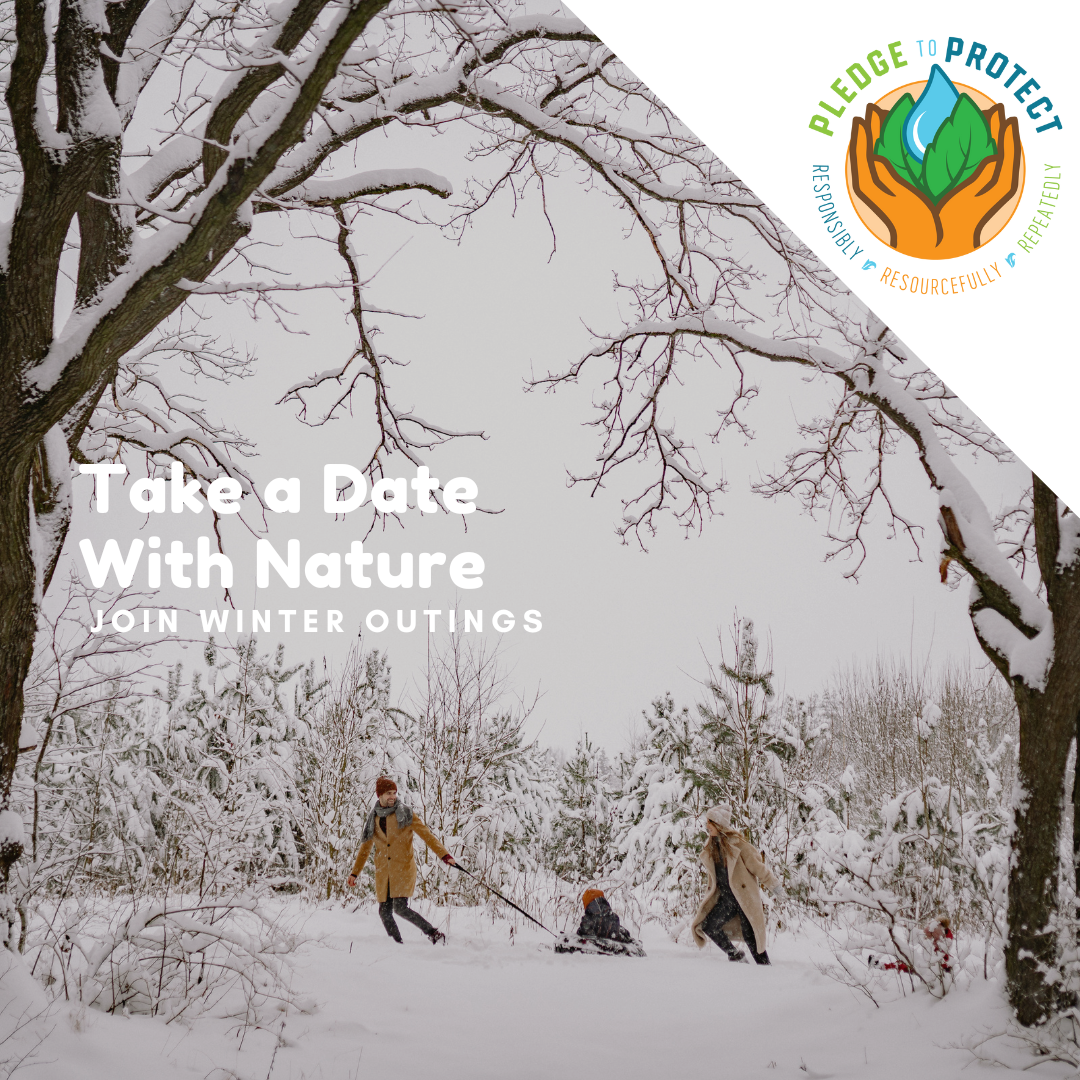
Winter is a good time to get outside. Trails are quieter, the pace is slower, and even a short walk can feel like a reset. Whether you’re heading out with a partner, meeting friends, or bringing the whole family along, being outdoors in winter creates space to spend time together without many distractions.
This February, a date doesn’t have to look like reservations and roses—it might look like connecting with nature. A nature date could mean a candle-lit walk, a guided hike, or learning something new about the land and wildlife around you. These events offer simple ways to enjoy the season, connect with your community, and support the places that make northern New York worth exploring year-round.
Community Science Opportunities
Do you want your winter outings to make a real impact? These community science opportunities turn learning into action!

Hike to Protect Hemlocks Learning Series
Learn to identify, survey, and report hemlock woolly adelgid (HWA) by joining guided survey sessions happening February through March 2026. HWA is an invasive insect that kills hemlock trees. Hemlock trees are a large majority of our forest tree species and provide many ecological benefits. You can help protect hemlock trees by surveying for and reporting sightings of HWA.

iMapInvasives Winter Mapping Challenge
Win prizes and help report hemlock woolly adelgid observations via the free mobile app! You must set up a free iMapInvasives user account to participate. Challenge runs through March 15, 2026.
1. Get outside and look for hemlock trees.
2. Check for white fuzz balls on the undersides of hemlock twigs – these are HWA egg masses.
3. Report your findings to iMap – submit a presence or not-detected record to document your effort.
Winter Events Worth Bundling Up For
Join family-friendly events that get you outdoors this winter!

8th Annual Cardboard Sled Race
February 7, 10 a.m – 1 p.m. | SUNY Canton Sledding Hill
Join Nature Up North for the 8th Annual Winterfest Cardboard Sled Races at the SUNY Canton sledding hill. Teams and individuals are invited to race sleds built entirely from cardboard in this fun, family-friendly winter event. Festivities include a parade of sleds, judging, and races for fastest time and special categories.

Candle-Lit Walk at Selkirk Shores State Park
February 14, 6-8 p.m. | Selkirk Shores State Park
Join New York State Parks, Recreation and Historic Preservation to celebrate Valentine’s Day with a magical winter stroll along candle-lit paths. Snowshoes are available for rent, and the evening includes refreshments, crafts, and a warm fireplace to cozy up by after your walk.

Owl Prowls with Tug Hill Tomorrow Trust
February 20, 5-6:30 p.m. | Joseph A. Blake Wildlife Sanctuary
March 21, 6:30-8 p.m. | Joseph A. Blake Wildlife Sanctuary
Come along on a guided twilight adventure, looking and listening for owls at the Joseph A. Blake Wildlife Sanctuary. Observe and learn how nocturnal animals are well-suited to their night-time activities. There is no fee for attendance or parking.

Winter Carnival Hike
February 21, 11 a.m. – 1:30 p.m. | Redwood Preserve
Join the Indian River Lakes Conservancy and explore the preserve as a true winter wonderland, learning how to identify trees and animal tracks along the way. Winter reveals so many hidden stories in the landscape, and this guided hike is a wonderful opportunity to slow down, observe, and connect with nature in a whole new way.
This hike is open to all ages and experience levels—whether you’re a seasoned nature enthusiast or just looking for a fun outdoor activity with family and friends. Stay after to sit by the glowing fire and enjoy hot dogs, s’mores, and hot chocolate.

Owls & Outdoors KidsTrek
April 2, 2:30-4 p.m. | Zenda Farms Preserve
Join naturalist Vici Diehl for a hands-on KidsTrek exploring the secret world of owls! Kids will learn fascinating facts about these nocturnal hunters, and connect with nature on a short hike on the Zenda Woods Trail. Children must be accompanied by an adult.
Species Spotlight: Invasive Bittersweet

Winter is a great time to spot invasive bittersweet (Celastrus orbiculatus), even when leaves are gone. Its bright red berries with yellow capsules often remain visible through the colder months, making it easier to identify along forest edges, trails, and roadsides.
Bittersweet spreads aggressively, wrapping around trees and shrubs, weighing them down, and competing with native plants for light and space. If you’re out on a winter walk or hike, keep an eye out for this invasive plant and report sightings to iMapInvasives.
Featured Tool: SLELO PRISM Species Handbook

Whether you’re new to invasive species or just want a refresher, the SLELO PRISM Species Handbook is a helpful companion for time spent outdoors. This resource provides clear descriptions, photos, and key identification tips for invasive plants, animals, and insects found in our region.
In Case You Missed It: Winter Watch

Winter Watch: Invasive Species You Can Spot This Season
Winter isn’t just for cozy fires and snowy hikes; it’s also the perfect time to spot invasive species that threaten our forests, lands, and trails. Many invasives have unique traits, such as persistent berries, lingering leaves, distinctive bark, or egg sacs, that make them stand out in the cold months. These conspicuous traits provide an opportunity to identify and report them. Check out this blog for examples of invasive shrubs, vines, and forest pests you may encounter this season, along with prevention and management tips.
Virtual Toolboxes
Visit the Protector’s Virtual Toolboxes below to access resources themed for each category, and to learn more about how to protect your favorite outdoor spaces from invasive species.
Lands & Trails
Lands & Trails
Forests
Waters
Gardens
Communities
Did you enjoy this blog post? Take our Pledge to Protect and get monthly emails showcasing actions you can take to protect your favorite hiking trails, paddleways, forests, garden, and community from the impacts of invasive species!
Take the Pledge to Protect
The Pledge-to-Protect is a fun, positive, inviting, engaging and rewarding way to participate in invasive species prevention and management.
|
|


