Attention travelers, spotted lanternfly (SLF) can easily hitchhike on your vehicles. Be sure to check the grill and wheel wells of your vehicle for SLF adults and eggs while doing end of season traveling.
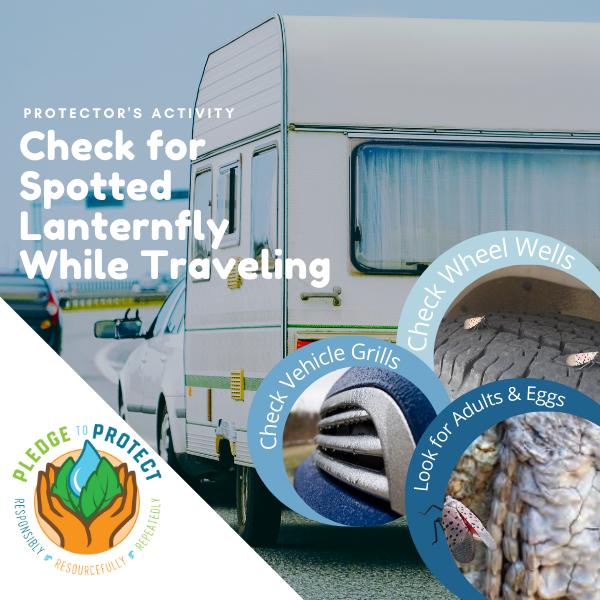
Protector’s Activity: Check for SLF While Traveling
August 18, 2023
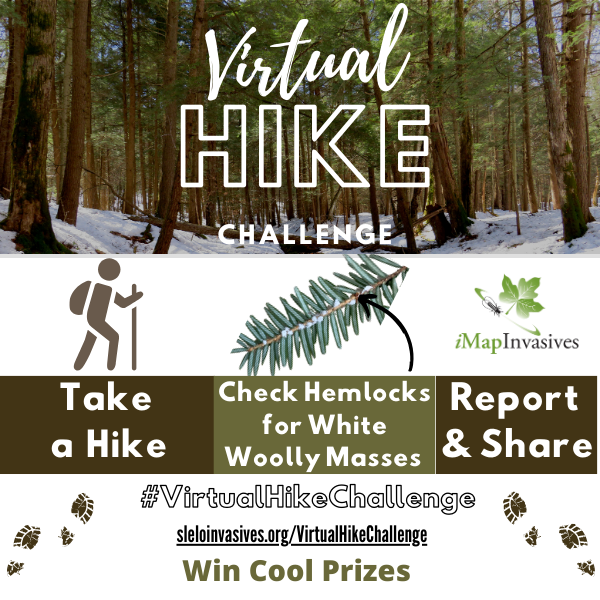
2023 Summer Newsletter Cover Story
August 2, 2023
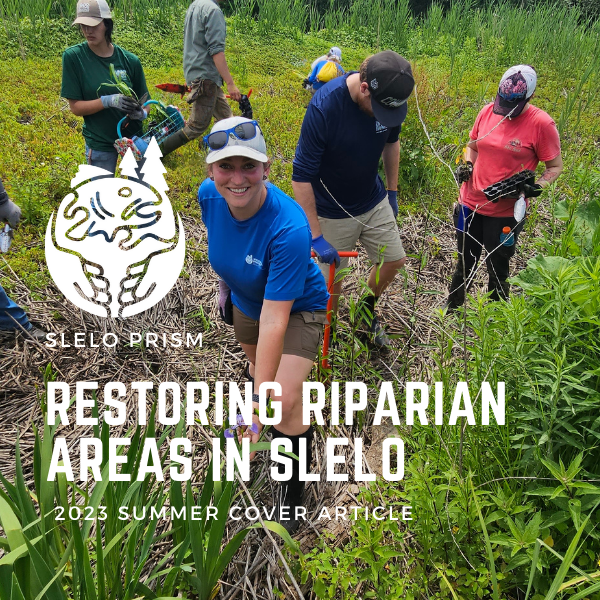
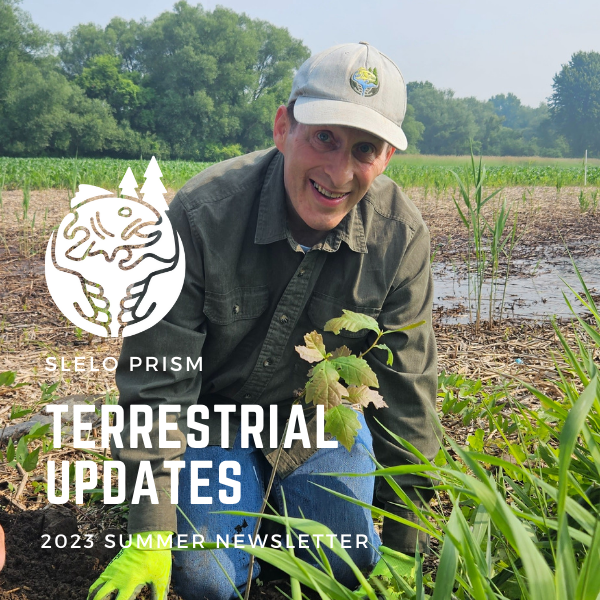
Beginning June 23rd, 45 people contributed to over 650 total person hours, 25% of which were volunteer hours. Where 6,272 plants were placed in the ground throughout the riparian areas of South Sandy Creek spanning over nearly 30 acres within the Lakeview WMA. Volunteers and staff endured rainy hot weather, and worked hard to install the plants over the course of just five days!
2023 Summer Terrestrial Updates
August 2, 2023
The latest updates from our Terrestrial Restoration and Resiliency Coordinator, Robert Smith.
2023 Summer Aquatic Updates
August 2, 2023
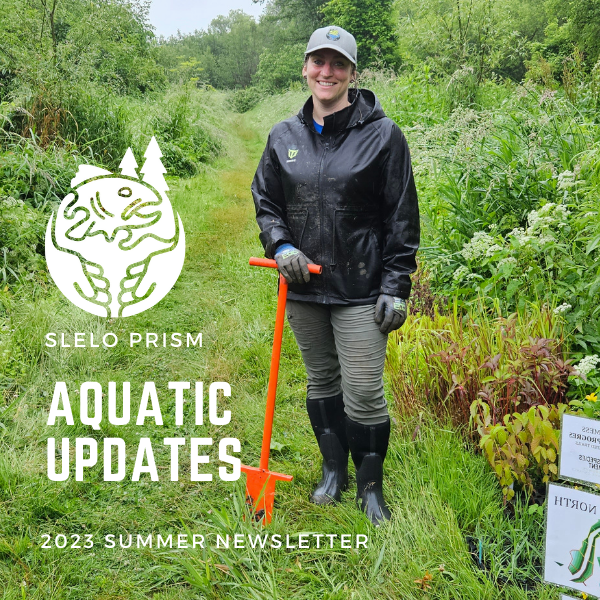
Get the latest updates from our Aquatic Restoration and Resiliency Coordinator, Brittney Rogers.
Species Spotlight-Water Soldier
August 2, 2023
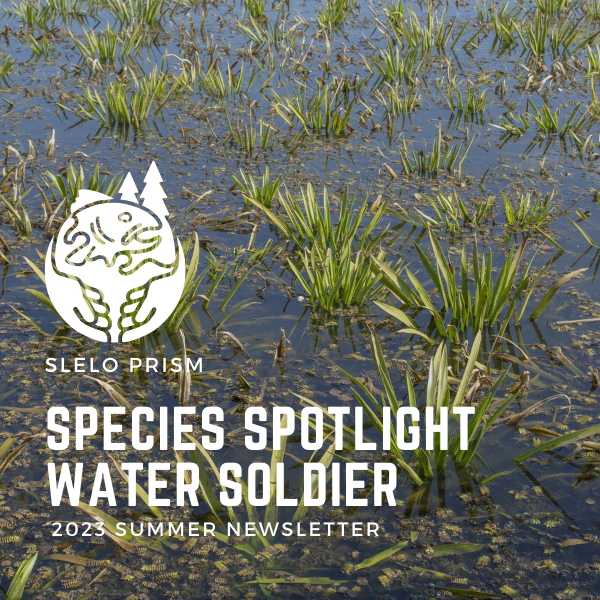
Recently, Water soldier has been detected by commercial fishers at the outlet of the Bay of Quinte. Due to concern for potential spread, the Ontario Ministry of Northern Development, Mines, Natural Resources, and Forestry Surveillance Program is expanding to include Eastern Lake Ontario, and the St. Lawrence River in 2023.
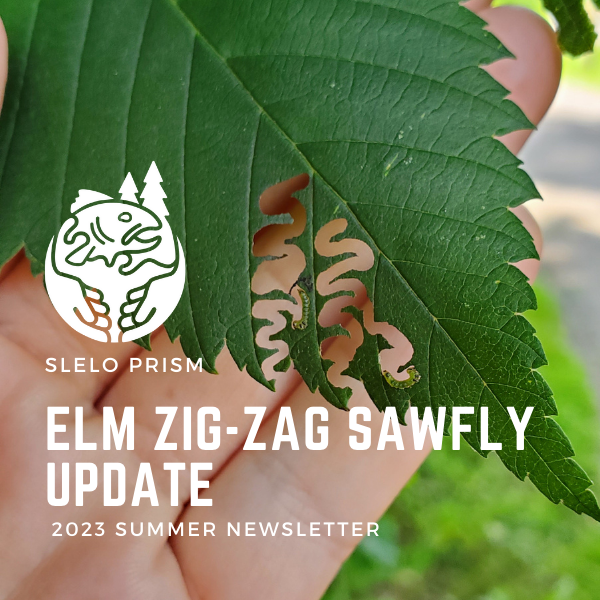
Elm Zig-Zag Sawfly Update
August 1, 2023
Elm zigzag sawfly (Aproceros leucopoda), an exotic pest native to East Asia that feeds exclusively on elm species, has been detected in many locations across New York State this season. EZS was first detected in St. Lawrence County in August 2022. Since, it has been found in Allegany, Ontario, Madison, Ulster, Schenectady, Albany, Saratoga, Warren, and Clinton, with new counties being confirmed weekly.
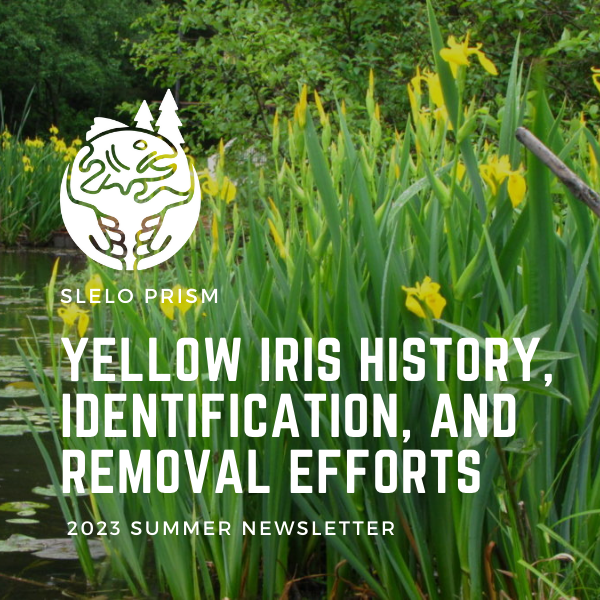
Yellow Iris-History, Identification, and SLELO Efforts
August 1, 2023
Yellow iris is a target species in the SLELO region. Get an overview of the species’ history, and identification, and learn of volunteer removal efforts.
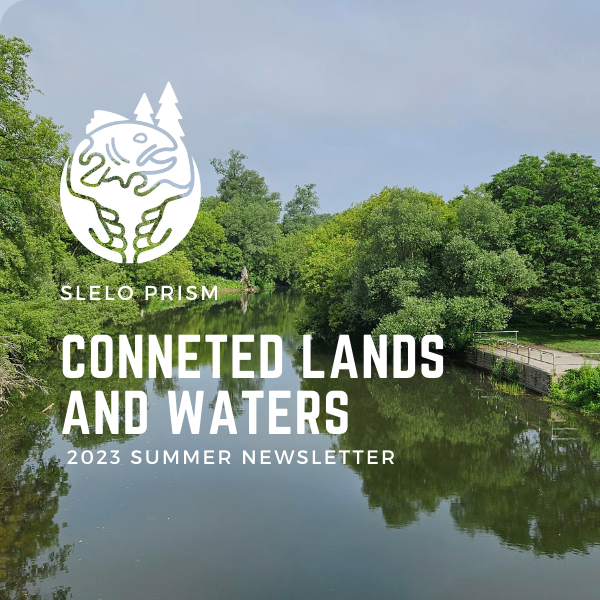
Connected Lands and Waters
August 1, 2023
By focusing invasive species suppression and habitat rehabilitation on connected areas, both terrestrial and aquatic areas, we can defragment our recovery efforts, preserve the resilience of these systems and augment their natural character to achieve a greater conservation impact.
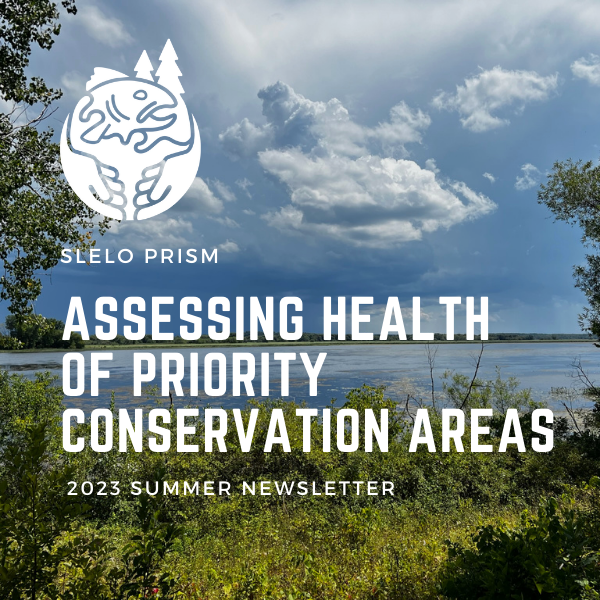
Priority Conservation Area Score Cards Progress
August 1, 2023
Is the health of our Priority Conservation Areas (PCAs) improving, maintaining, or worsening as a result of our invasive species management strategies and restoration activities? Answering this important question first requires a benchmark. To achieve this, the SLELO PRISM continues to develop scorecards for each PCA, and to date, approximately half of our PCAs have been benchmarked.
How You Can Help Conserve Ash with MaMA
August 1, 2023
The Monitoring and Managing Ash (MaMA) program of the Ecological Research Institute (ERI) has made considerable progress in its efforts to detect “lingering ash”, trees that likely have some resistance to emerald ash borer (EAB) and from which material can be used to breed highly EAB-resistant trees. As EAB’s invasion expands in the SLELO region, participation in MaMA needs to expand as well, so locally adapted lingering ash can be found.