This article was featured in the 2025 Autumn Newsletter by Emma Kerl, SUNY Oswego.
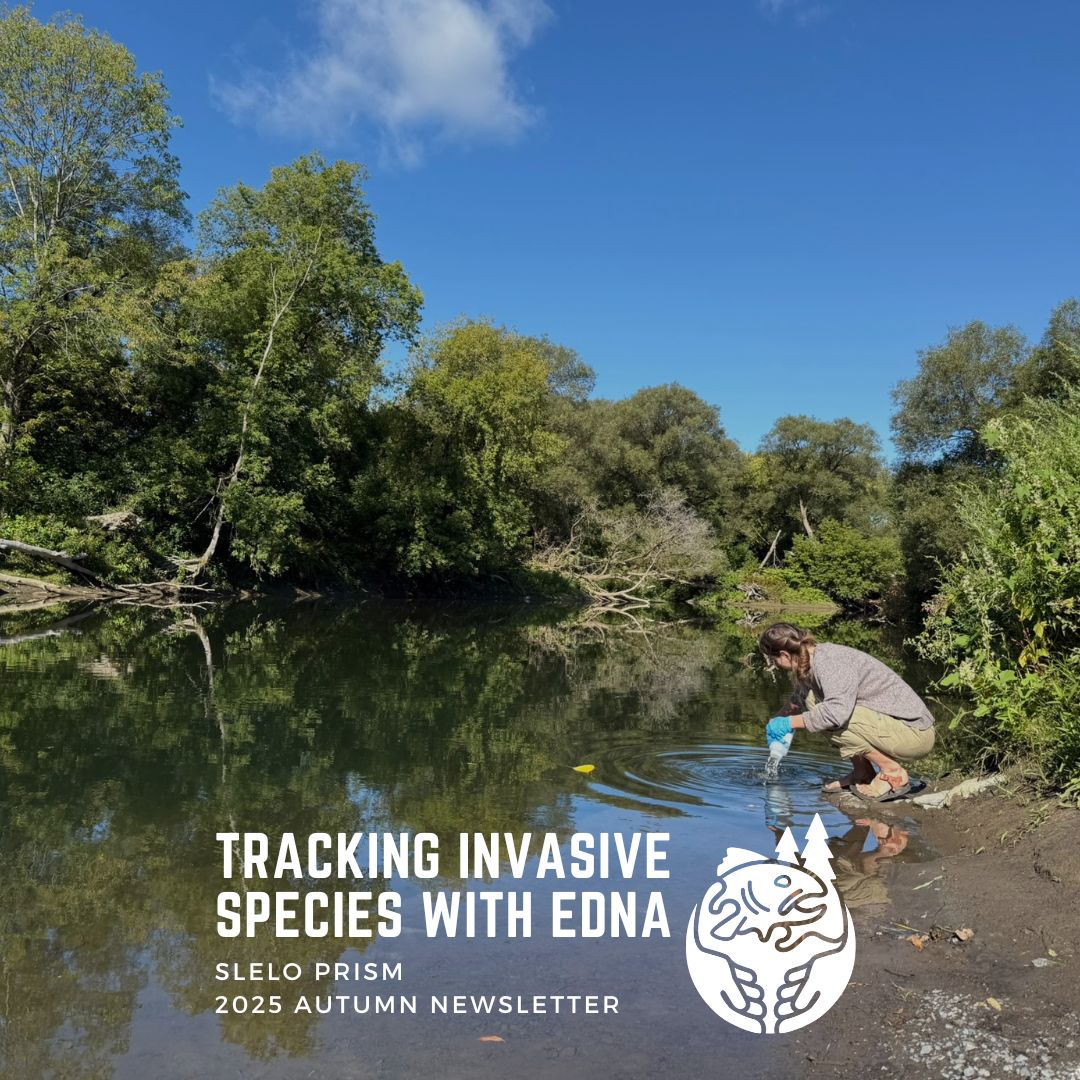
Researchers from SUNY Oswego’s Aquatic Conservation Laboratory are collaborating with the St. Lawrence Eastern Lake Ontario Partnership for Regional Invasive Species Management (SLELO PRISM) to monitor and detect invasive species in the Lake Ontario watershed using environmental DNA (eDNA) technology.
The research project is supported by a $10,000 award from The Nature Conservancy for its work on identifying non-native species that rapidly colonize and permanently alter aquatic communities, such as those in the Great Lakes region. Using eDNA, researchers can detect these species far sooner than traditional “fish-in–hand” surveys, enabling earlier action to contain or prevent their spread.
Environmental DNA is genetic material that organisms leave behind in their environment. For aquatic species, this means scientists can collect a simple water sample and screen it for DNA from fish, invertebrates, plants, or even bacteria. The approach functions like forensic science for ecosystems — as long as researchers find a genetic footprint, they know the species is present.
Traditional methods for detecting invasive species often rely on visible observations or physically capturing the organism, which can only occur after a population has already established itself. eDNA provides an early warning system, allowing action to prevent further spread. Invasive species pose a significant threat to the ecological balance of the Great Lakes region, outcompeting native fish, disrupting food webs, and, in some cases, preying on valuable species. The economic impact is also substantial, putting the region’s multibillion-dollar fishing industry and local economies at risk.
SUNY Oswego eDNA lab. Photo credit, Nick Sard SUNY Oswego.
The project is focusing on waterbodies in the Lake Ontario watershed and screening for nine invasive species known to affect the region: rusty crayfish, bighead carp, silver carp, northern snakehead, tench, round goby, tubenose goby, hydrilla and Eurasian watermilfoil. Once a positive detection occurs, response efforts can include targeted field surveys, physical removal or other containment efforts.