
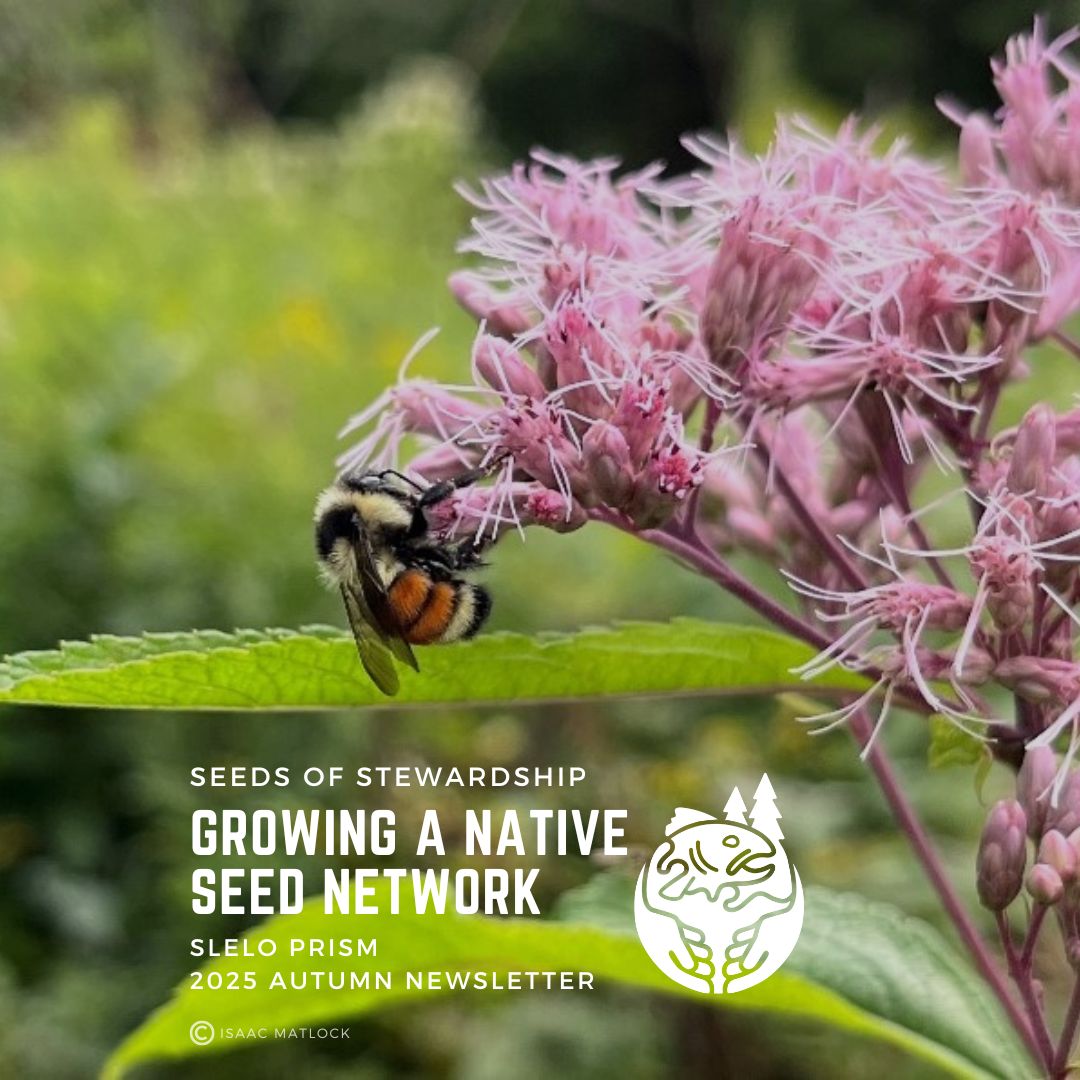
This article was featured in the 2025 Autumn Newsletter by Isaac Matlock, CCE Jefferson.
A new initiative, Seeds of Stewardship, is taking root across Jefferson, Lewis, and St. Lawrence counties. Led by Cornell Cooperative Extension of Jefferson County, the project aims to build a regional native seed network that supports eco-systems, restores habitats, and strengthens our connection to the land and water.
Focusing on the northeastern Lake Ontario and St. Lawrence River region, the project highlights the importance of native plants in protecting shorelines, improving water quality, and supporting wildlife and pollinators. Restoration efforts often struggle to find locally adapted plant material—species suited to our unique soils and climate. Seeds of Stewardship addresses this by creating a community-based system for collecting, storing, and growing seeds from our region’s ecosystems.

By training volunteers, landowners, and students to collect and propagate native seeds, the project will enhance both environmental health and community engagement. Participants will learn how native plants reduce erosion, filter stormwater, and provide habitat, while creating beautiful, biodiverse landscapes. Educational workshops and hands-on programs will invite people of all ages to participate through seed collection, citizen science, and habitat restoration.
The initiative supports key conservation efforts, including the Great Lakes Action Agenda and New York State’s Native Plant Seed Supply Program (Senate Bill S7849). These programs promote sustainable, local approaches to water protection, habitat restoration, and climate resiliency.

By building local seed supply chains and increasing the use of regionally adapted plants, Seeds of Stewardship will make native plants more accessible and ensure conservation efforts reflect our local ecology.
In 2026, the project will establish three community seed storage hubs and twenty certified seed collection sites across diverse habitats—dunes, wetlands, forests, and grasslands. Volunteers will be trained to collect seeds using national conservation standards, ensuring long-term genetic diversity and ecological health. Collected seeds will be available to conservation groups, schools, and municipalities for shoreline stabilization, pollinator gardens, and habitat recovery.
By the end of 2026, Seeds of Stewardship aims to collect and store seeds from at least 15 native species, develop a regional wild seed collection guide, and train dozens of volunteers in restoration techniques. Its broader goal is to inspire lasting stewardship, empowering communities to care for the natural resources that make our region unique. Through collaboration, education, and hands-on conservation, Seeds of Stewardship will help our landscapes thrive while deepening people’s connection to the place they call home
Please fill out the form below to be added to our listserv and receive our seasonal newsletter, event invitations and other announcements.

