What's The Issue?
Picture yourself stepping into a quiet winter forest. Snow softens every sound, settling gently on the branches of towering evergreens. The air is crisp, the world still. Among the trees, eastern hemlocks stand out—dark, graceful, and steady, their evergreen needles offering life and color when everything else sleeps. They line the ravines, cluster along icy streams, and form the quiet backbone of the winter woods.
Now imagine this same forest without hemlock trees.
Hemlocks are more than iconic evergreens—they’re foundational and keystone species that shape entire forest ecosystems. They provide shade for streams, keeping them cool for trout; they offer food and shelter for wildlife, stabilize steep slopes, filter water, and store impressive amounts of carbon. In many places, hemlocks are the forest, but an invasive insect is threatening their survival.
Hemlock Woolly Adelgid (HWA) is putting these trees at risk. This tiny sap‑feeding pest drains hemlocks of nutrients, leading to thinning canopies, dying buds, and eventually tree death. As hemlocks disappear, cool, moist forests shift into hotter, drier landscapes where wildlife struggle, lose food and shelter, and invasive plants can quickly move in.
HWA has been in New York since the 1980s, with major infestations downstate and in the Finger Lakes. While the St. Lawrence Eastern Lake Ontario region currently has fewer infestations—mainly in Oswego County near Eastern Lake Ontario and Oneida Lake—the threat is growing. Hemlock-rich forests in the Tug Hill Plateau and Adirondacks could be next.
Protecting our winter forests starts with early detection, quick reporting, and community action.
What Can You Do to Help?
Protecting hemlocks starts with you.
Detecting new HWA populations early is one of the most powerful tools we have. By learning to recognize and report HWA using NYiMapInvasives, New York’s official invasive species database, you can directly contribute to saving our forests. Their free mobile app makes reporting quick and simple.
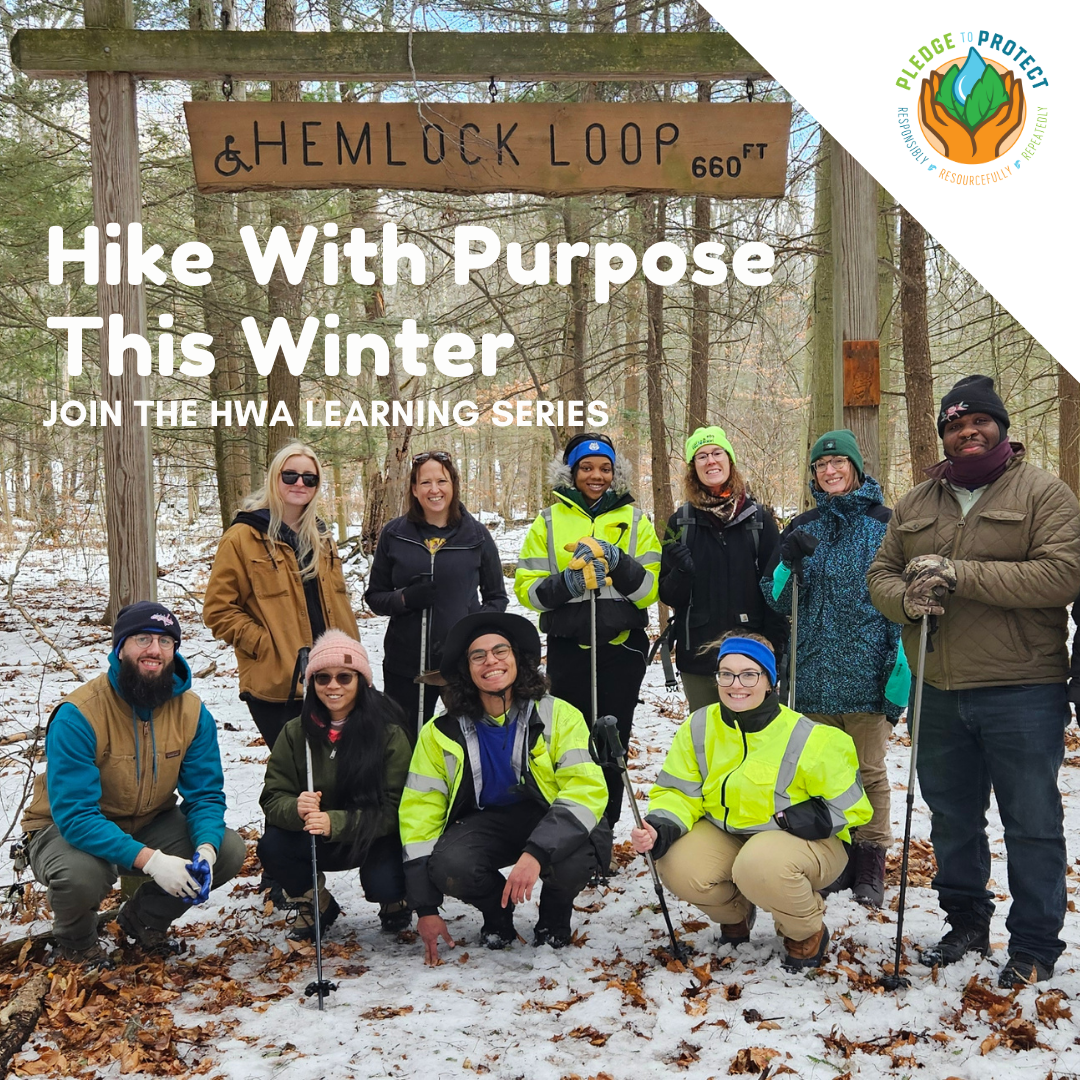
This winter, you’re invited to join the HWA Learning Series—a hands-on training program running from January through March 2026. You’ll learn how to identify HWA, use the iMapInvasives app, and conduct meaningful surveys in the field. Lace up your boots, breathe in that winter air, and hike with a purpose.
Your participation matters. Every report helps scientists and land managers respond faster, protect more trees, and preserve the forests we love.

Help Spread the Word
Tell your friends and family about the Pledge to Protect and HWA learning series by sharing the posts below.
Did you enjoy this blog post? Take our Pledge to Protect and get monthly emails showcasing actions you can take to protect your favorite hiking trails, paddleways, forests, garden, and community from the impacts of invasive species!
Take the Pledge to Protect
The Pledge-to-Protect is a fun, positive, inviting, engaging and rewarding way to participate in invasive species prevention and management.
|
|


