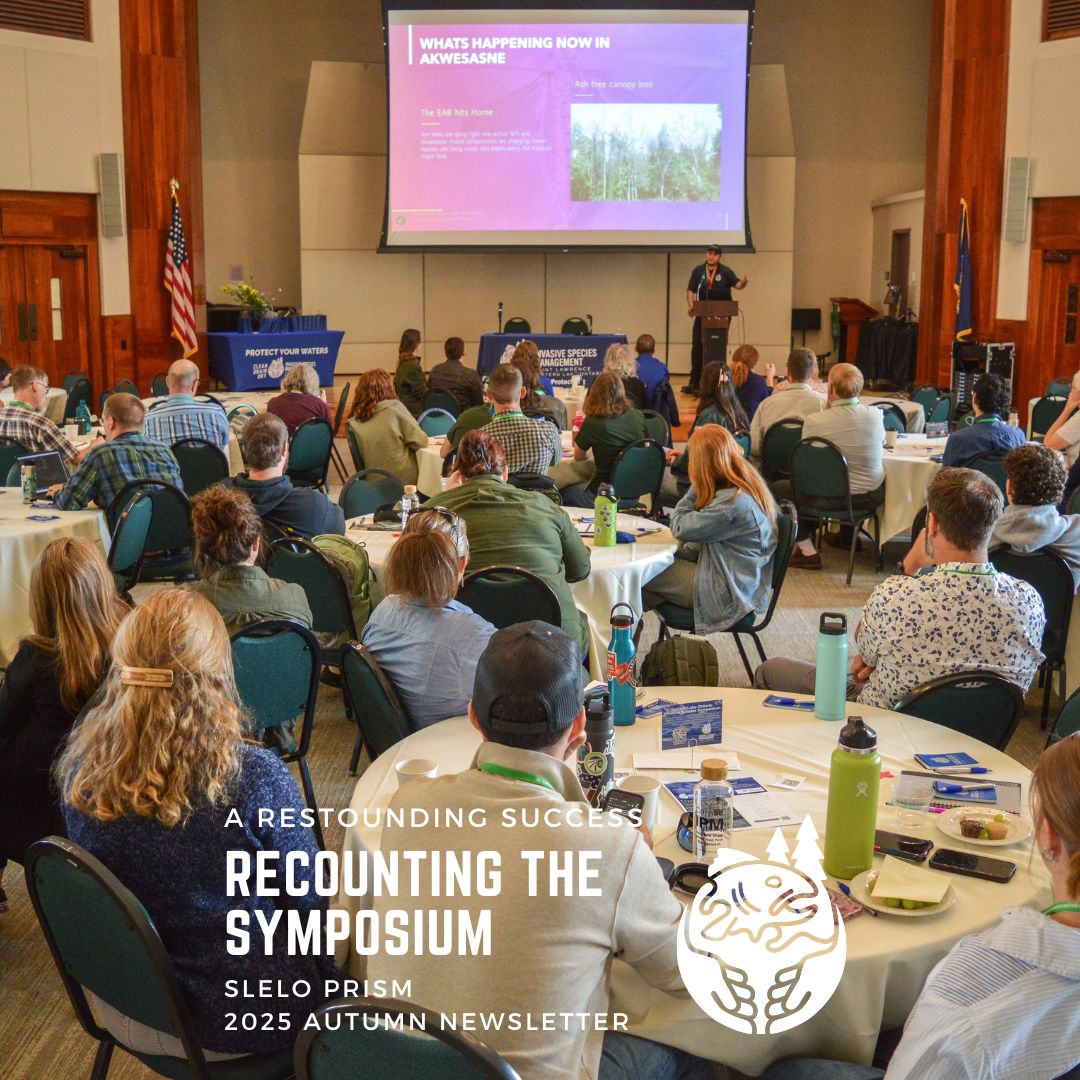
A Resounding Success: 2025 Eastern Lake Ontario Invasive Species Symposium
November 10, 2025
This article was featured in the 2025 Autumn Newsletter by Megan Pistolese-Shaw, SLELO PRISM.
The energy was electric at SUNY Oswego’s Sheldon Hall Ballroom on June 12th, as over 100 passionate attendees gathered for the most successful Eastern Lake Ontario Invasive Species Symposium to date! With 20 dynamic presenters, 14 engaging exhibitors, and a keynote address from the renowned Robin Wall Kimmerer, the event was a vibrant celebration of collaboration, innovation, and ecological stewardship.
This year’s theme, “Adaptive Approaches for Terrestrial and Aquatic Invasive Species Management,” struck a powerful chord. It emphasized the integration of Traditional Ecological Knowledge (TEK), the impacts of climate change, and the urgent need for biodiversity restoration. The agenda was thoughtfully designed to foster meaningful dialogue, featuring interactive conversation prompts and ample time for networking and exploration of exhibitor booths.
SLELO Staff with Robin Wall Kimmerer. Photo credit, Jillian Lee.
The excitement didn’t actually begin there. On June 11th, hands-on workshops at SUNY Oswego’s Rice Creek Field Station brought theory into practice. Participants contributed to emerald ash borer biological control monitoring and engaged in a Water Protector’s session led by aquatic ecology experts, Dr. Eric and Berre Hellquist—an unforgettable experience that deepened understanding of our lands and waters.
Behind the scenes, a dedicated team of volunteers and partners made it all possible. Special thanks to the Education Committee members—Cierra LaDorothy-Williams, Jillian Lee, Linda Gibbs, Emily Fell, Jayla White, Payton Reese, and Lucas Russell—whose tireless efforts ensured the event ran seamlessly, and to photographers Kelly Roe and Jillian Lee.
For those who couldn’t attend or want to relive the experience, recordings of the presentations, the full agenda, slides, and speaker resources are available on our symposium resources webpage. If you joined us, we’d love to hear your thoughts through our symposium and workshop evaluation forms.
This year’s symposium wasn’t just an event, it was a movement. A testament to what’s possible when knowledge, community, and action come together to protect our ecosystems.